Frying oil isn't cheap, so it makes sense to get as much use out of it as you safely can. The good news is that cooking oil can be reused. The catch is that it breaks down a little every time it's heated, and how you handle it decides how long it lasts.
The quick answer
- Yes, you can reuse cooking oil several times if you strain it and store it covered.
- Oil used for clean frying, like fries, lasts longer than oil used for breaded, battered or fish dishes.
- Judge it by its condition, not a fixed number of uses.
- Throw it out when it's dark, foamy, smoky or smells off.
How Many Times Can You Reuse Cooking Oil?
There's no single number, because it depends on what you fry and how you treat the oil. Oil used for fries or other clean foods holds up longer. Breaded and battered foods shed crumbs that burn and speed up breakdown, and fish leaves flavors behind that carry into the next batch.
Temperature matters too. Oil that is regularly pushed past its smoke point breaks down much faster. Restaurants that filter their fryers daily and keep temperatures steady get far more life out of each batch than kitchens that don't.
A useful rule of thumb
America's Test Kitchen tested this side by side. Their guidance: oil used for breaded and battered foods can be strained and reused about three or four times, while oil used for cleaner items like fries and potato chips can go eight or more times, especially if you top it up with some fresh oil along the way.
Treat those numbers as a starting point. The condition of your oil always wins over the count.
How to Clean Used Cooking Oil
- Let it cool until it is safe to handle.
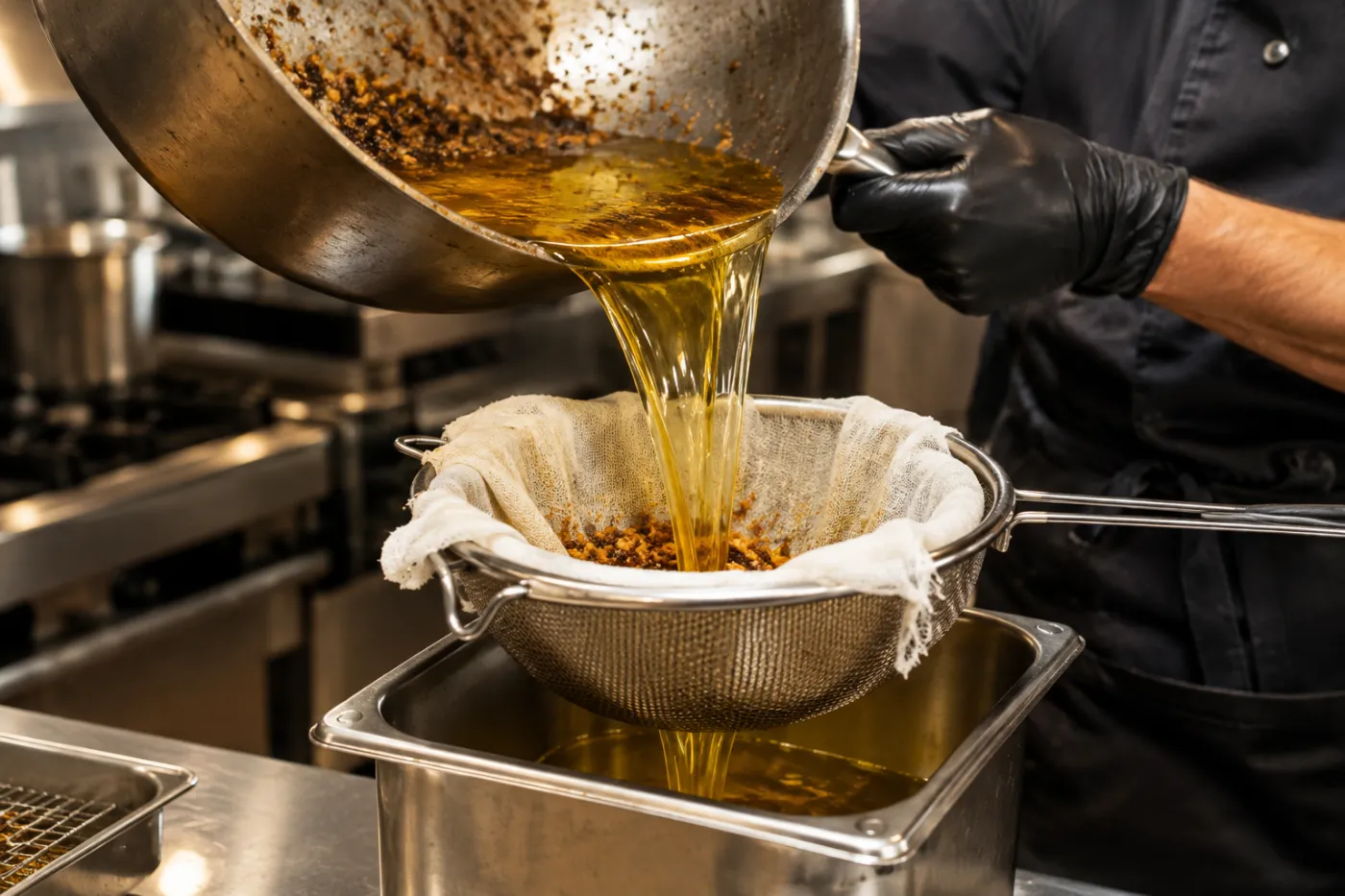
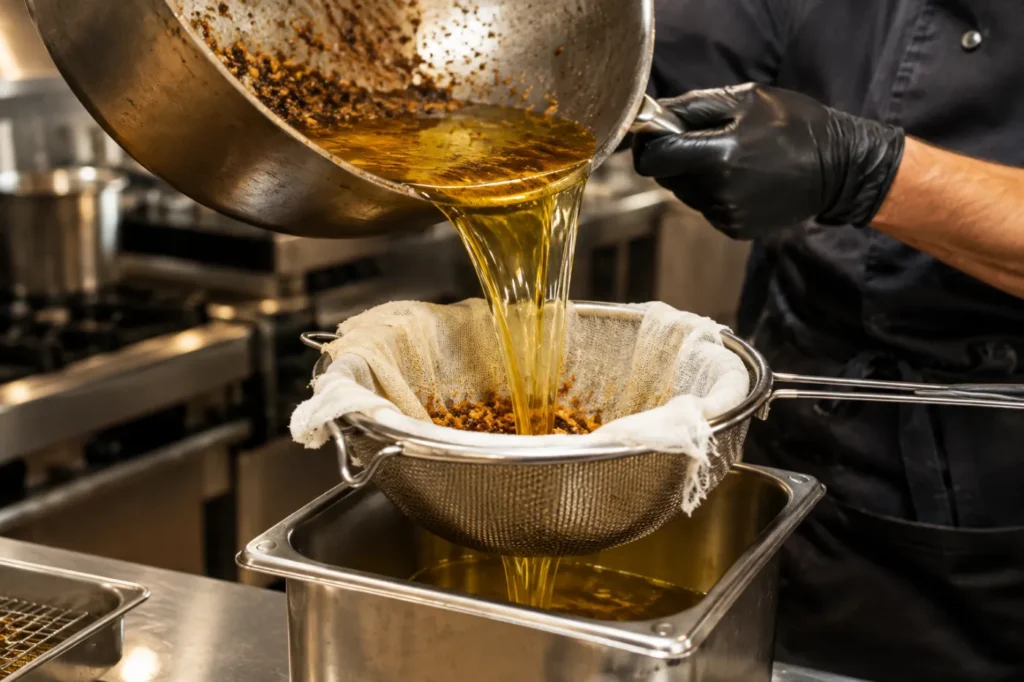
- Strain it through a fine mesh strainer lined with cheesecloth or a coffee filter. In a restaurant, use your fryer's filtration system.
- Store it covered in a clean, sealed container.
- Keep it cool and dark. Heat and light speed up breakdown.
What about cleaning oil with baking soda or gelatin?
You'll find home tips for clarifying used oil with baking soda or gelatin. Gelatin clarification is a known home method for pulling out fine particles. Neither replaces proper straining, and in a commercial kitchen a fryer filter does the job far better.
Which Oils Hold Up Best for Reuse?
Refined oils with a high smoke point handle repeated frying best. Common choices in commercial kitchens include:
- Canola oil
- Peanut oil
- Soybean oil and vegetable oil blends
- Sunflower and high-oleic oils
Unrefined oils have lower smoke points and break down faster at frying temperatures, so they aren't a good pick if you plan to reuse your oil.
Signs Your Oil Is Done
- It has turned dark brown or cloudy.
- It foams heavily when food goes in.
- It smokes at your normal frying temperature.
- It smells rancid, fishy or burnt.
- Food browns too fast or tastes off.
- A gummy film builds up around the fryer.
For more on how long oil holds up, read how long cooking oil lasts.
Mistakes That Shorten Oil Life
- Skipping the strain. Leftover crumbs burn and break the oil down.
- Overheating. Running above the smoke point damages the oil fast.
- Salting food over the fryer. Salt falling into the oil speeds up breakdown.
- Mixing oil types. Different oils have different smoke points.
- Leaving it uncovered. Air, light and debris all shorten its life.
Reusing Oil in a Restaurant Kitchen
In a commercial kitchen, getting the most out of your oil comes down to routine. Most kitchens filter their fryers at least once a day, skim crumbs during service, top off with fresh oil as levels drop, and change the oil when quality checks say it's time. Some use test strips or a meter that measures total polar materials, which rise as oil breaks down.
Keeping separate fryers for fish, breaded items and fries also helps each batch last longer and keeps flavors from mixing.
When It's Time to Toss It
Once oil is past saving, don't pour it down the drain. Follow our guide on how to dispose of used cooking oil. Restaurants should have it collected and recycled.
Done with your fryer oil?
Toledo Grease Service picks up used cooking oil from Houston restaurants for free and recycles it. Call 832-860-8399 or request a pickup.
Frequently Asked Questions
Is it safe to reuse cooking oil?
Yes, if it has been strained, stored covered in a cool place, and doesn't show signs of breakdown. Throw out oil that smells rancid, smokes at normal temperatures or looks dark and foamy.
Can you reuse oil after frying fish?
You can, but fish flavor carries into whatever you fry next. Many kitchens keep a separate fryer or batch of oil for fish.
Should you refrigerate used cooking oil?
At home, refrigerating strained oil in a sealed container can help it last longer. It may turn cloudy in the cold, which is harmless.
Can you mix new oil with old oil?
Topping off a fryer with fresh oil is common practice and can extend its life a little. It won't rescue oil that is already broken down.
How many times can you reuse frying oil?
America's Test Kitchen suggests about three or four times for breaded and battered foods, and eight or more for cleaner items like fries. Always check the color, smell and smoke before you reuse it.
How long can you keep used frying oil?
Strained and sealed in a cool, dark place, it keeps for a while, but it keeps slowly breaking down. If it smells off or looks dark and cloudy, throw it out.