Fresh oil is not cheap, and a good filter job can stretch it. Cleaning used cooking oil is simple, but only up to a point. Some oil is worth saving and some is done. Here is how to tell the difference and how to clean what is worth keeping.
What Cleaning Oil Actually Does
Straining removes food bits and burnt particles. That matters because those leftovers burn faster, make oil darker and give food an off taste. Cleaning does not repair oil that has broken down chemically, so it will not bring back oil that is old or heavily used.
How to Strain Used Cooking Oil
- Let it cool. Wait until it is warm, not hot. Never filter oil that is near frying temperature.
- Set up your filter. Line a fine mesh strainer with cheesecloth, a coffee filter or a paper towel, and place it over a clean container.
- Pour slowly. Let the oil pass through. Do not squeeze the cloth, which pushes sediment through.
- Store it. Use a clean, dry container with a tight lid.
- Label it. Write what you fried in it and the date.
For storage tips, see how to store used cooking oil.
Does Baking Soda or a Potato Help?
You will see tips about frying a slice of potato or adding baking soda to the oil. These can pull out a little flavor and some small particles, but they do not make bad oil good. Treat them as optional extras. The strainer does most of the real work.
Cleaning Oil in a Restaurant
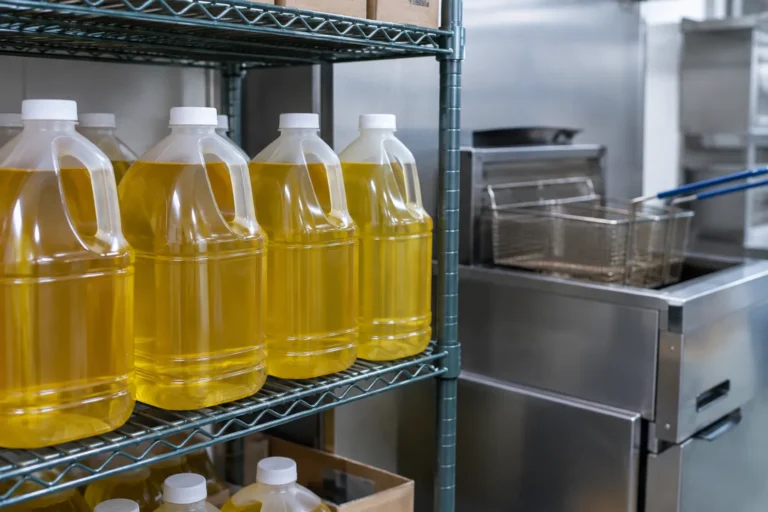
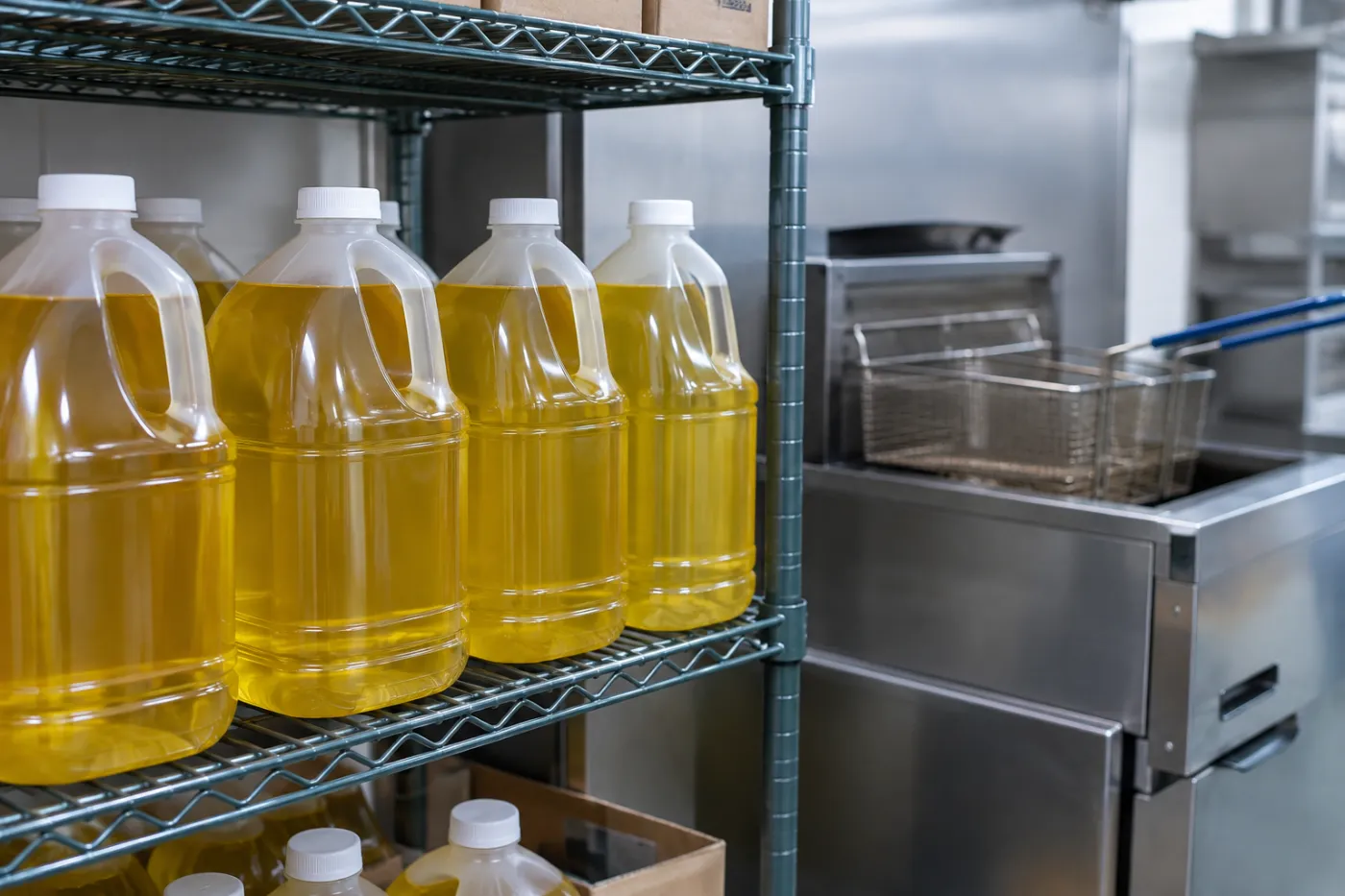
Commercial kitchens have an easier route. Many fryers have built-in filtration or use filter machines, and daily filtering is one of the best ways to extend oil life. It also keeps food tasting consistent and slows down the breakdown that forces a full change. Our guide on reusing cooking oil goes deeper.
Signs the Oil Is Done
- It is dark and does not lighten after filtering
- It smells rancid, sour or like old fish
- It foams heavily or will not stop bubbling
- It smokes at a lower temperature than it used to
- Food tastes bitter or greasy
When you see these, filtering will not save it. Replace the oil.
What to Do With Oil You Cannot Reuse
Do not pour it down the drain or toss a whole container in the trash. For a home kitchen, cool it and take it to a collection site. For a restaurant, put it in your collection container and let it be recycled. See where to dispose of used cooking oil for the options.
What You Should Not Do
- Do not filter oil while it is hot
- Do not mix different oils if you want a clean taste
- Do not leave oil open on the counter where it picks up moisture
- Do not keep reusing oil that smells or foams
- Do not pour it down the sink
Oil that has been heated many times breaks down and can smoke or taste bitter. No filter fixes that.
Which Oils Hold Up Best
Oils with higher smoke points, such as peanut, canola and refined vegetable oils, tend to hold up better for repeated frying. Strongly flavored foods like fish carry their taste into the oil, so many cooks keep a separate batch for them. Watch the oil, not the calendar.
A Quick Home Routine
- Cool and strain after each use
- Store in a sealed jar in a dark cupboard
- Label the contents and date
- Check smell and color before each reuse
- Retire it when it darkens or smells off
Restaurants can use the same idea at a larger scale, with filtration built into the fryer and a container for what gets retired. See how often to change fryer oil for the kitchen version.
Done With the Oil? We Will Take It
Toledo Grease Service gives Houston restaurants a free container and scheduled pickups, with same-day or next-day service when you need it. Call 832-860-8399 or send us a message.
Frequently Asked Questions
How many times can I reuse cooking oil?
It depends on what you fry and how well you filter. Oil used for breaded or strongly flavored food breaks down faster. Replace it when it darkens, smells off or foams.
Can I filter hot oil?
No. Let it cool until warm to avoid burns and spills.
Does baking soda clean cooking oil?
It can help a little, but straining does the real cleaning. It will not fix oil that has broken down.
How do I store cleaned oil?
In a clean, dry, airtight container, in a cool and dark place.
What should a restaurant do with old oil?
Put it in a collection container for recycling. We provide one free.
Do you serve Houston restaurants?
Yes. Call 832-860-8399.