Every kitchen that fries food ends up with used cooking oil waiting for pickup. How you store it in the meantime decides whether the back of your restaurant stays clean and safe, or turns into a slippery, smelly spot that draws pests and gets written up at inspection.
The quick answer
- Let oil cool completely before moving it.
- Strain out food bits so they don't rot in the container.
- Keep it in a sealed, purpose-built oil container with a closed lid.
- Store the container on level ground, away from drains, heat and foot traffic.
- Schedule pickups often enough that the container never overflows.
Why Storing Used Cooking Oil Correctly Matters
Spilled oil is a slip hazard for your staff and a magnet for rats and roaches. Open containers smell, especially in Houston heat. And oil that sits uncovered collects rainwater and trash, which makes it harder to recycle.
It also matters at inspection time. City of Houston health investigators check your dumpster, your rendering oil bin and the area around it. A clean, closed container on a clean pad is the easiest part of that check to pass.
How to Store Used Cooking Oil, Step by Step
1. Let it cool first
Fryer oil runs around 350°F. Moving it hot is how burns and spills happen. Turn the fryer off and let the oil reach a safe temperature before you drain or carry it.
2. Strain it
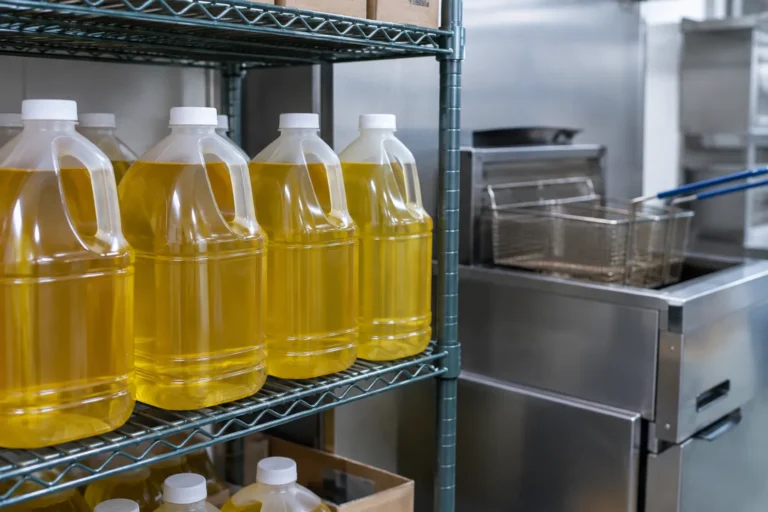
Run the oil through your fryer's filter or a fine mesh strainer. Crumbs and batter left in the oil break down, smell and attract pests. Cleaner oil is also worth more to a recycler.
3. Use the right container
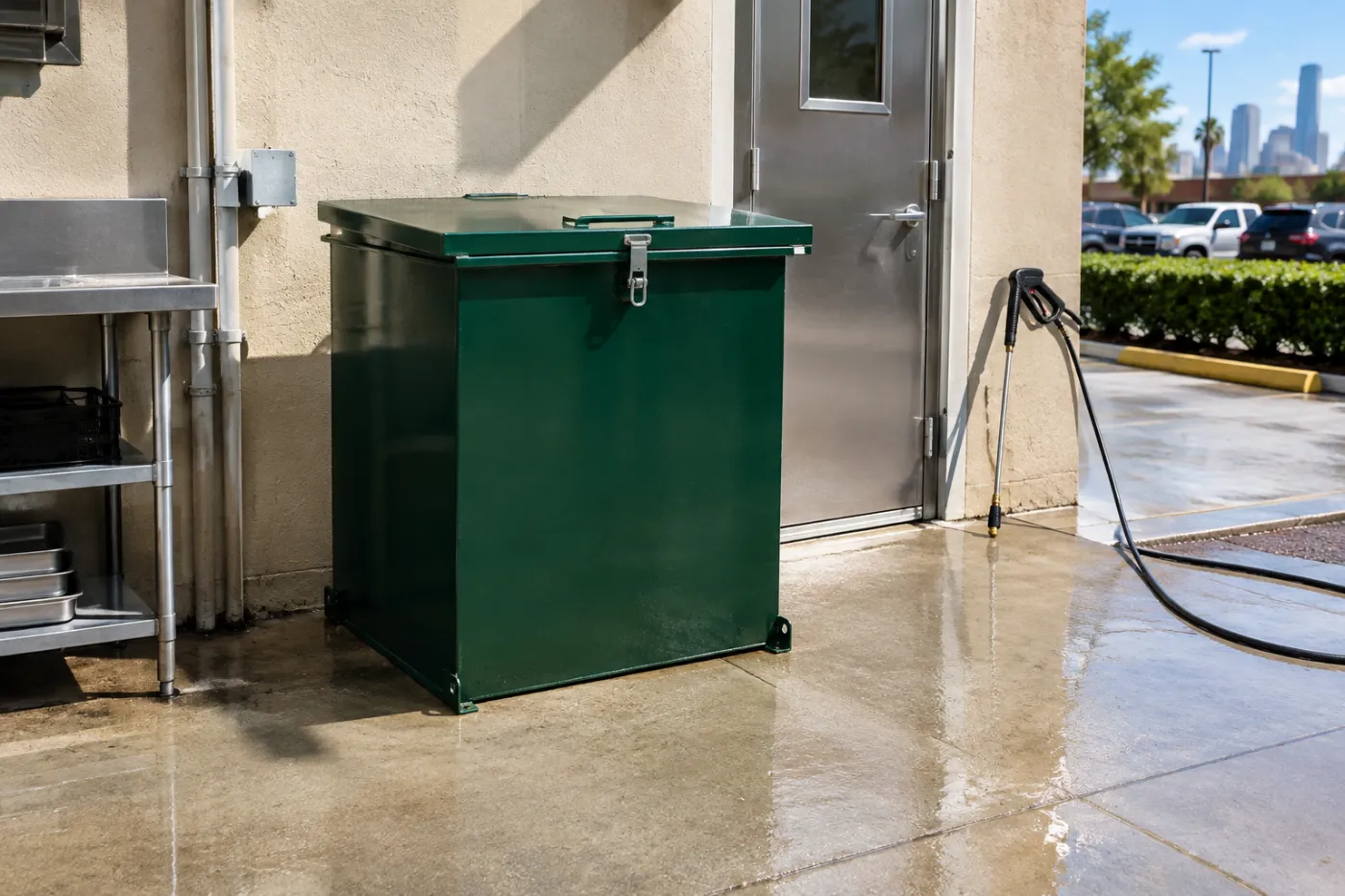
Use a heavy-duty container built for cooking oil, with a lid that seals. Open buckets, thin plastic jugs and cardboard boxes leak and tip over. Most collection services supply and maintain the outdoor container for free, so you shouldn't need to buy one.
4. Pick the right spot
- On flat, level ground so it can't tip.
- Near the back door, where the collection truck can reach it.
- Away from floor drains and storm drains, so a spill can't run into the sewer.
- Out of walkways and away from heat sources and direct afternoon sun.
5. Keep the lid closed
A closed lid keeps out rain, pests and trash. A locking lid also helps prevent grease theft, which is more common than most owners think. More on that in our guide on why people steal used cooking oil.
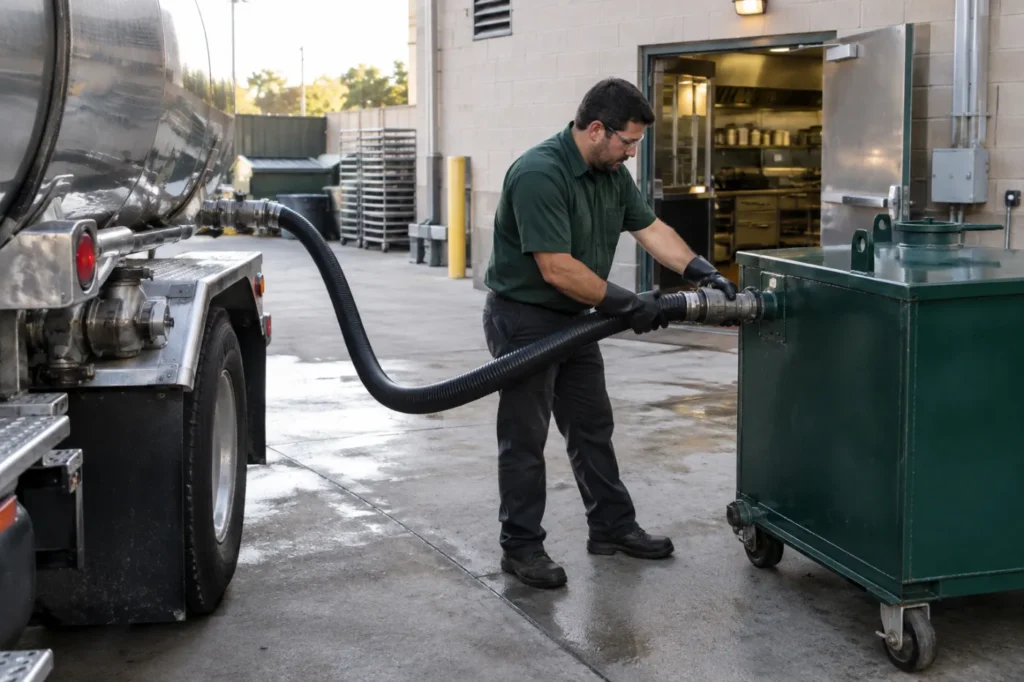
Moving Oil From the Fryer to the Container Safely
Most spills happen somewhere between the fryer and the back door. A few habits cut that risk down a lot.
- Use a lidded oil caddy or transport container, not an open bucket or stock pot.
- Don't fill the caddy to the brim. Leave room so it doesn't slosh.
- Clear the path to the back door before you start carrying.
- Wear non-slip shoes and heat-resistant gloves.
- Pour slowly into the container so it doesn't splash.
What Should Never Go in Your Oil Container
- Water. It separates from the oil and lowers its value.
- Food scraps and trash. They rot and contaminate the batch.
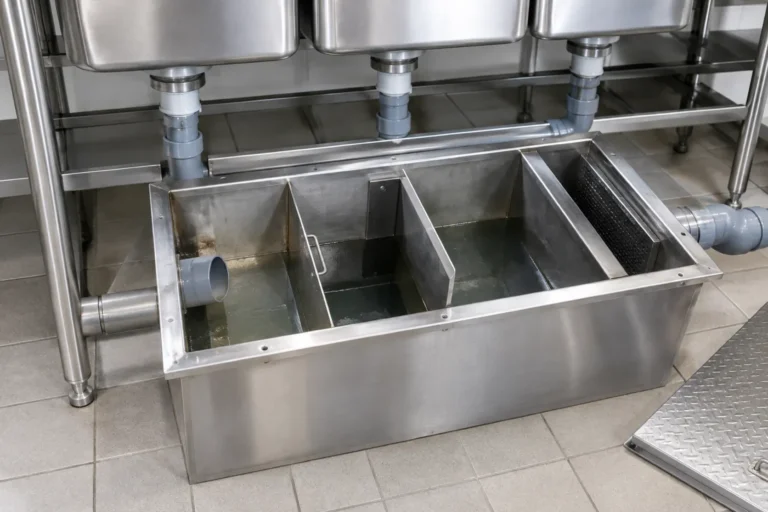
- Grease trap waste. That is a different waste stream with its own pumping service.
- Chemicals, cleaners or motor oil. They can make the whole container unrecyclable.
A Simple Closing Routine for Your Staff
Good storage is mostly habit. A short end-of-night routine keeps things consistent no matter who is closing.
- Filter the fryers.
- Move spent oil to the outdoor container in a closed caddy.
- Close and lock the container lid.
- Wipe up drips on the container and the ground around it.
- Check how full the container is and tell the manager if it's getting close to the top.
Put it on the closing checklist so it doesn't depend on one person remembering.
Keeping the Area Around the Container Clean
Even with good habits, small drips add up. Over time the pad around the container gets slick and dark, which is a slip risk and a bad look at inspection. Put down absorbent material when something spills, sweep it up, and have the area pressure washed regularly.
Toledo Grease Service offers pressure washing for its restaurant customers, so the area around your container stays clean between pickups.
How Long Can You Store Used Cooking Oil?
For a restaurant, the answer should be "until the next scheduled pickup," and no longer. Oil that sits for months breaks down, smells worse and invites theft. Set a weekly, biweekly or monthly pickup schedule based on how much oil you go through, so the container is emptied before it gets full.
Not sure how fast your oil breaks down in the first place? See how long cooking oil lasts.
Storing Small Amounts at Home
At home, let the oil cool, pour it into a sealed can or jar and keep it in a cool, dark place if you plan to reuse it. When it's done, seal it and put it in the trash, or take larger amounts to a City of Houston Environmental Service Center. Our guide on where to dispose of used cooking oil in Houston covers your options.
Get a free container and a pickup schedule
Toledo Grease Service supplies and maintains a free collection container and empties it on a schedule that fits your kitchen. Family-owned in Houston since 1995. Call 832-860-8399 or request a pickup.
Frequently Asked Questions
Can you store used cooking oil in plastic?
Yes, if it is a heavy-duty container made for oil, with a tight lid. Avoid thin jugs and open buckets, which crack, leak and tip over.
Where should a restaurant keep its used cooking oil container?
Outside near the back door on level ground, where the collection truck can reach it, away from drains, heat and foot traffic.
How full should the container get before pickup?
It should never overflow. If your container is regularly close to full before pickup day, ask your collector to pick up more often.
Do I have to buy a container for used cooking oil?
Usually not. Toledo Grease Service supplies and maintains the collection container for free.
Can I keep used cooking oil inside the kitchen?
Only for a short time, in a closed caddy, away from heat and walkways. Move it to the outdoor collection container by the end of the shift.
What should I do if my oil container is damaged or leaking?
Stop using it, clean up the spill and call your collection company to swap it out. Toledo Grease Service maintains the containers we supply.