Every restaurant with a fryer ends up with used oil. What you do with it decides whether your back lot stays clean, whether your drains stay clear and whether an inspector has anything to write up. The good news is that it comes down to a short routine your whole crew can follow.
The quick answer
- Filter the oil to extend its life, then retire it when it breaks down.
- Let it cool before you move it.
- Pour it into a closed, labeled oil container.
- Schedule regular pickup so the container never overflows.
- Never pour it down a drain, into a dumpster or onto the ground.
Step 1: Filter Oil While It Is Still Good
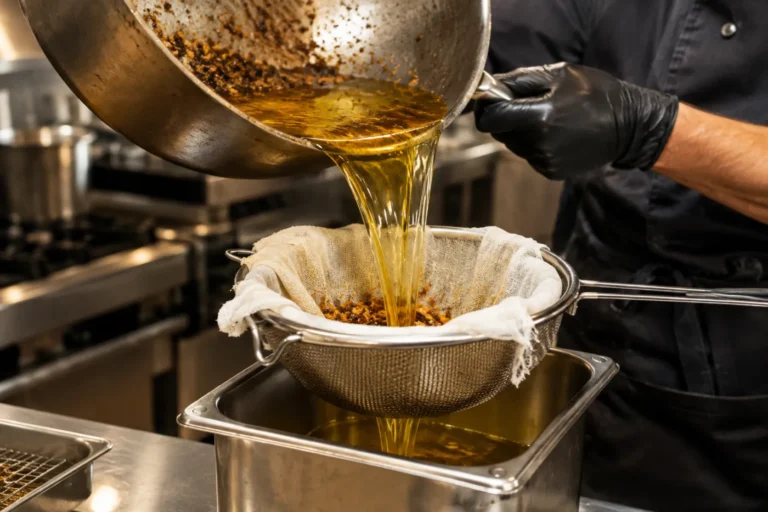
Most kitchens can get more life out of fryer oil by filtering it daily. Straining out crumbs and breading slows how fast the oil darkens and breaks down. Our guide on how often to change fryer oil covers the signs that it is time to retire a batch.
Step 2: Cool It and Move It Safely
Fryer oil sits around 350°F. Never carry it hot. Turn the fryer off, let it cool to a safe temperature and use a lidded transfer caddy so it does not slosh on the way to the back door. Most oil burns and slips happen right here, between the fryer and the container.
Step 3: Store It in a Closed Container
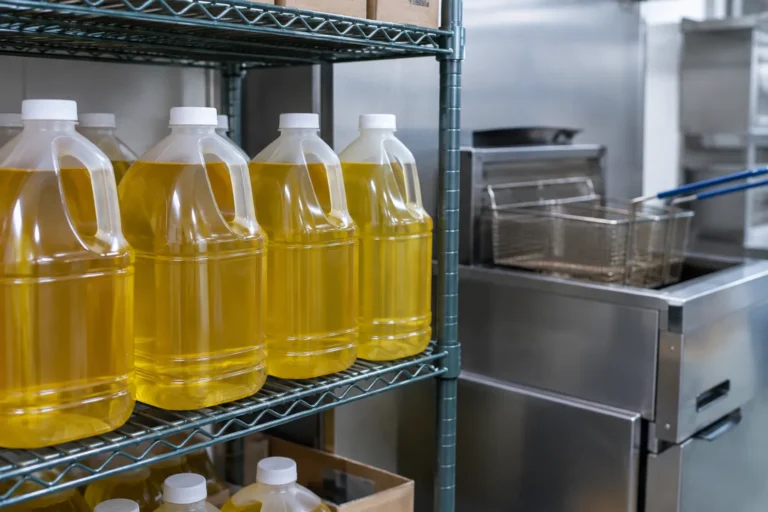
Used oil should go into a sealed, purpose-built container, not an open bucket or a stack of old jugs. A closed container keeps out rain, trash and pests, and it keeps the smell down in Houston heat. If you are not sure what to look for, see our guide to used cooking oil containers for restaurants. More on the habits that prevent spills is in how to store used cooking oil.
Step 4: Set Up Regular Pickup
A container that overflows is the number one problem we see. Pickup should match how much you fry. High-volume kitchens often need weekly service. Smaller ones can do biweekly or monthly. If your volume jumps for a busy season, ask for an extra pickup instead of letting the container run over. Our pickup service includes weekly, biweekly and monthly schedules, plus same-day or next-day pickup when you need it.
What Not to Do With Used Cooking Oil
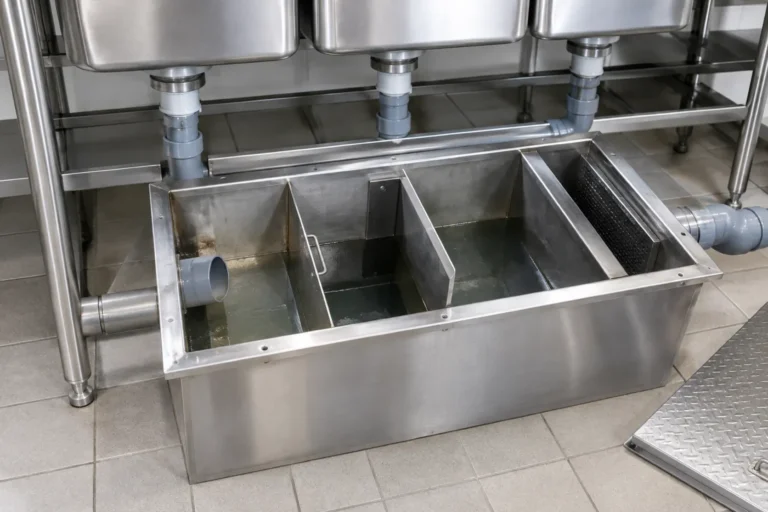
- Do not pour it down a sink or floor drain. It cools, hardens and clogs lines. See can you pour cooking oil down the drain.
- Do not toss it in the dumpster. It leaks, attracts pests and can get you in trouble with your hauler.
- Do not dump it behind the building or on the ground. It stains the pavement and can reach storm drains.
- Do not let it sit open. Rain and trash make it harder to recycle.
Where the Oil Goes After Pickup
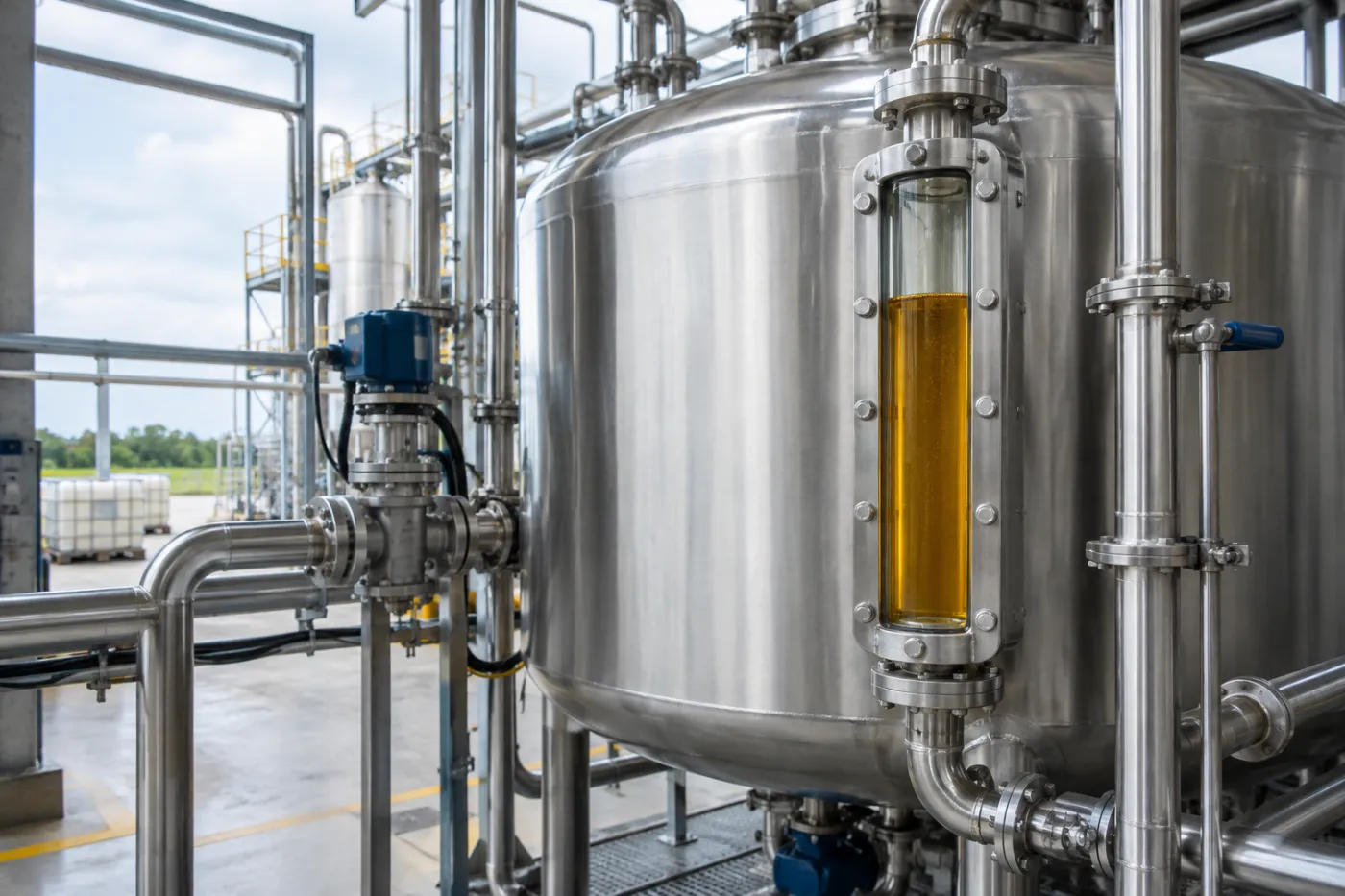
Collected oil is taken to be processed and recycled, most often into biodiesel and renewable fuel, and it can also go into other industrial products. You can read the full breakdown in what is used cooking oil used for.
A Note for Houston Restaurants
Houston food establishments are expected to keep grease out of the sewer system, and health inspectors look at the area around your oil container and dumpster. A clean pad, a closed lid and a regular pickup schedule take care of most of what they look for. Rules can change, so check with the City of Houston if you are unsure about a specific requirement.
A Simple Daily Routine Your Crew Can Follow
The kitchens that never have oil problems are the ones with a routine written down. Put these steps on the closing checklist so it does not depend on one person remembering.
- Filter or retire the oil in each fryer.
- Move spent oil to the container in a lidded caddy, never an open pot.
- Close and lock the container lid.
- Wipe up drips on and around the container.
- Note how full the container is and tell the manager if it is above three quarters.
Common Mistakes We See
- Overfilling transfer buckets so oil sloshes on the walk out.
- Leaving the lid open for convenience, which invites rain, trash and pests.
- Adding dishwater or mop water to the oil container.
- Waiting for the container to overflow before calling for pickup.
- Storing extra jugs of used oil beside the container instead of scheduling another pickup.
Why It Matters More Than You Think
Used oil is easy to ignore until something goes wrong. A single spill can leave a stain on the pad, a slip hazard for staff and a bad impression at inspection. Clean, closed storage and regular pickup protect your staff, your pavement and your reputation, and they cost you nothing when the pickup is free. If the area around your container is already stained, our pressure washing service can bring it back.
If you run more than one location, use the same routine everywhere. Consistency is what keeps a multi-unit operation from having one messy back lot that drags down the rest.
Related Reading
Need a free oil container and regular pickup?
Toledo Grease Service has been family-owned since 1995. Call 832-860-8399 or request a pickup.
Frequently Asked Questions
Is it free to have used cooking oil picked up?
For most restaurants, yes. Toledo Grease Service provides a free container and collects used cooking oil from Houston-area kitchens at no charge.
How much oil does a restaurant produce?
It depends on how many fryers you run and how much you fry. A busy kitchen can fill a container every week. A smaller one may take a month or more.
Can I reuse fryer oil instead?
Yes, for a while. Filtering helps, but oil eventually breaks down and has to go. See can you reuse cooking oil.
What if my container is full early?
Call us. We offer same-day and next-day pickup so you do not have to wait for the next scheduled visit.