Short answer: no. Pouring cooking oil down a sink, floor drain or toilet is one of the most common ways kitchens end up with clogged lines and unhappy plumbers. It is also something Houston health and sewer rules are built to prevent.
The quick answer
- Oil looks like a liquid, but it cools and hardens inside pipes.
- It builds up with food bits and soap and blocks the line over time.
- Hot water and dish soap do not fix it. They just move it further down.
- Collect used oil in a closed container and have it picked up and recycled.
Why Oil and Drains Do Not Mix
Hot oil flows easily, so it seems harmless. Once it hits cooler pipes it thickens and sticks to the walls. Every pour adds another layer. Add flour, food scraps and soap and you get a hard plug that can back up your kitchen. In a restaurant this usually means a stopped sink during a rush, a call to a plumber and sometimes a closed kitchen.
Hot Water and Soap Do Not Solve It
A common myth is that flushing oil with hot water and dish soap clears the problem. It does not. The oil breaks up for a moment, then re-forms further down the line where you cannot see it. That is often in the building drain or the city sewer, which makes the problem bigger, not smaller.
What About the Grease Trap?
A grease trap or interceptor is designed to catch the small amount of grease that comes off dishes and equipment. It is not designed to take whole batches of fryer oil. Dumping oil into it fills it fast and means more frequent cleanings. If you want to know how traps work, read what is a grease trap and grease trap vs grease interceptor.
What to Do With Used Cooking Oil Instead
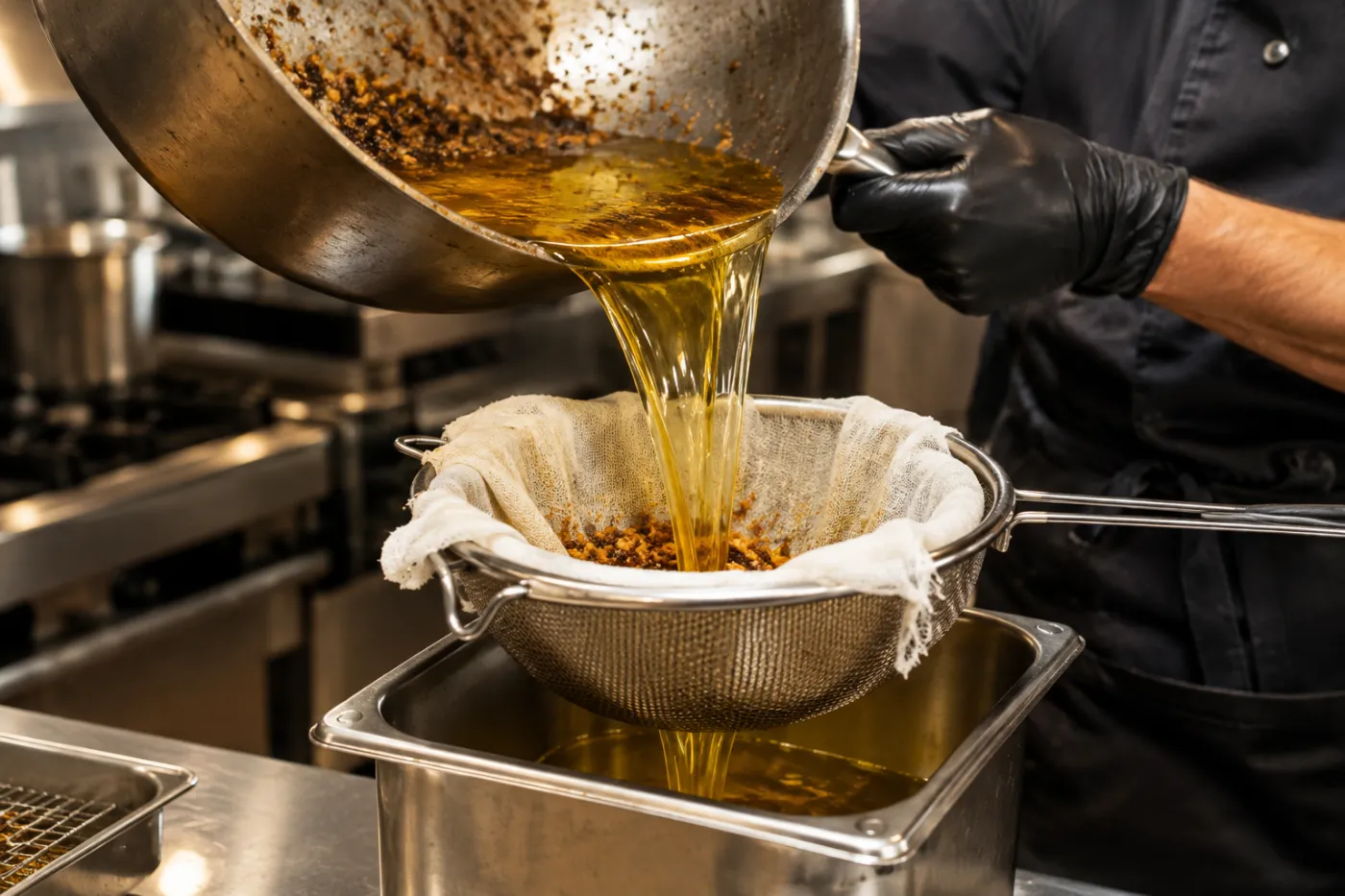
- Let the oil cool.
- Strain out food bits.
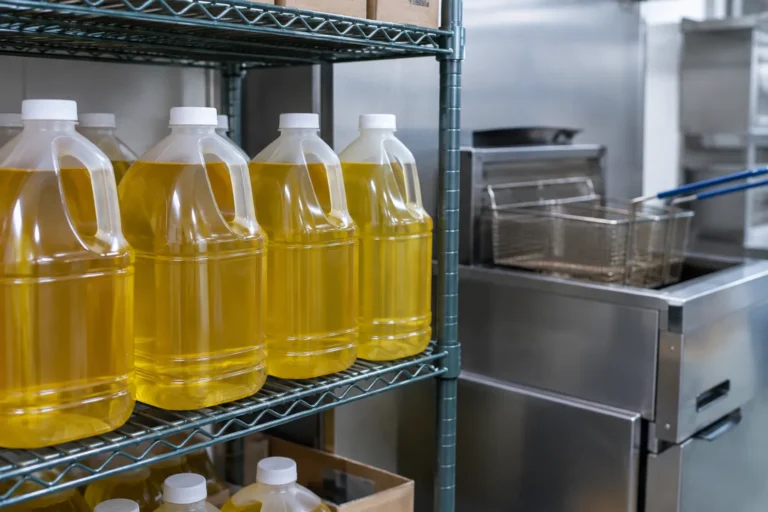
- Move it in a lidded caddy to a closed oil container.
- Schedule regular pickup.
Collected oil gets recycled, most often into fuel. You can read more in how to dispose of used cooking oil.
What About Small Amounts at Home?
Even at home, the better habit is to let it cool, pour it into a sealed container and take it to a recycling drop-off if your area has one. For restaurants, a free pickup service is the easiest route.
What Pouring Oil Down the Drain Can Cost You
The expense is rarely the oil itself. It is everything that follows. A clogged line can mean an emergency plumber visit, lost sales if you have to stop dish or prep, and sometimes a repair bill for pipes that have to be cleared or replaced. If grease reaches the city sewer, the problem can grow beyond your building.
Signs Oil Is Already Building Up in Your Lines
- Sinks that drain slowly, especially after dish rushes.
- Gurgling sounds or a sewer smell in the kitchen.
- Standing water around floor drains.
- Frequent drain cleaning that never seems to last.
If you see these signs, do not just snake the line again. Find out where the grease is coming from. Often the answer is a habit, like pouring oil or scraping plates into the sink instead of the trash.
Build the Habit in Your Kitchen
- Scrape plates and pans into the trash before washing.
- Use drain strainers and empty them into the trash.
- Keep a lidded caddy at every fryer so staff always have a better option than the sink.
- Train every new hire on day one. Most drain problems come from people who were never told.
A free container and regular pickup removes the temptation. When it is easy to do the right thing, staff do it. See our pickup service for schedule options.
Related Reading
- What to Do With Used Cooking Oil at a Restaurant
- Where to Dispose of Used Cooking Oil
- Used Cooking Oil Collection
Stop pouring money down the drain.
Get a free container and regular oil pickup for your Houston restaurant. Call 832-860-8399 or request a pickup.
Frequently Asked Questions
Can I pour a little cooking oil down the drain?
It is best not to. Small amounts add up over time and build the same blockages as big ones.
Is it OK to pour oil down the drain with hot water?
No. Hot water only carries the oil further down the pipe, where it cools and hardens.
Can restaurants be fined for dumping grease?
Cities can issue violations and charge for line cleanup when grease causes sewer problems. Check with the City of Houston for current rules.
What should a restaurant do with fryer oil?
Collect it in a closed container and schedule a recycling pickup. Toledo Grease Service provides free containers and pickup in the Houston area.