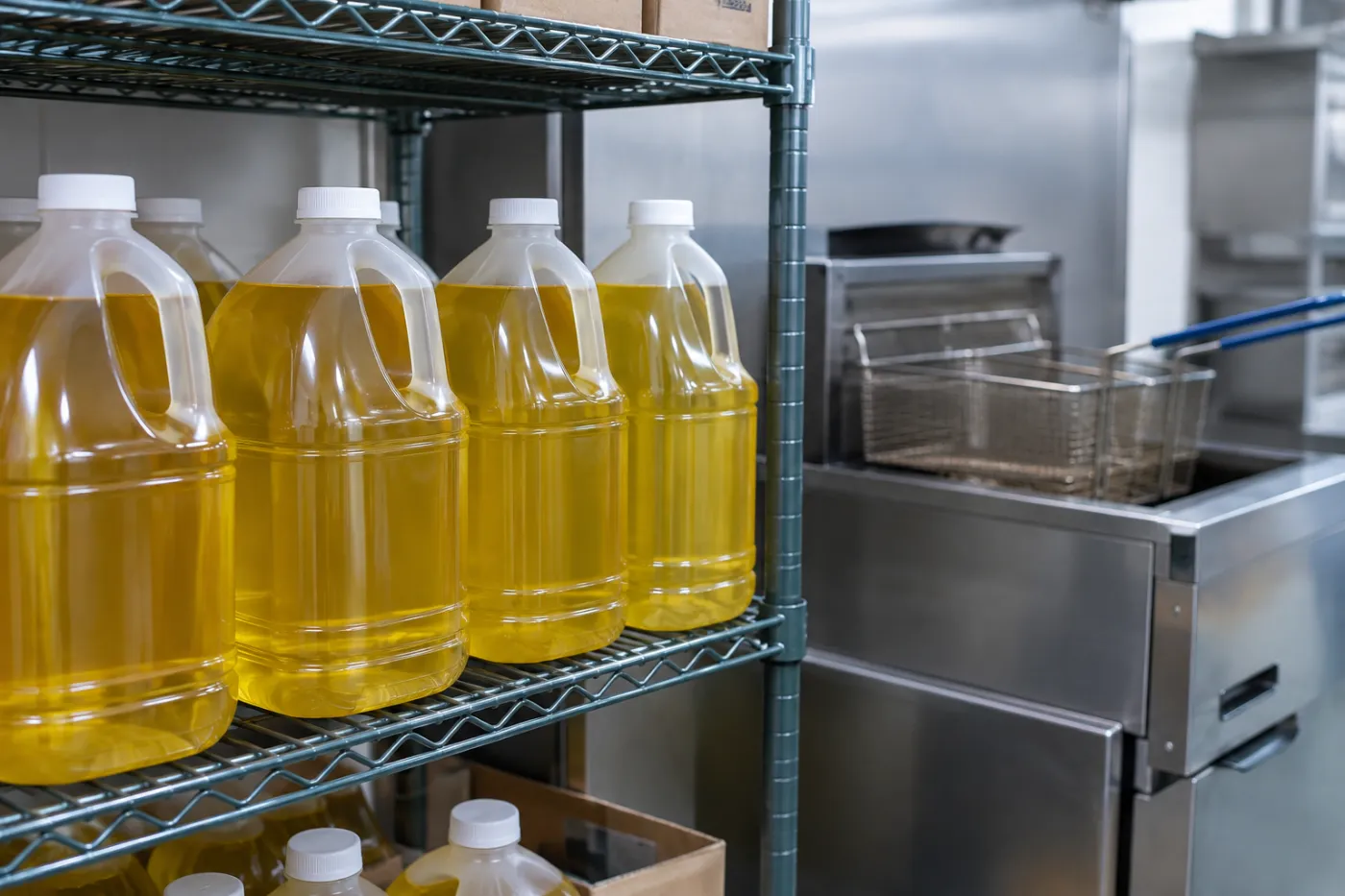
If you have been talking to oil collectors, you have probably heard the term yellow grease. It sounds technical, but it just means used cooking oil from a fryer. Here is what that covers, what it does not and why it matters to your restaurant.
The quick answer
- Yellow grease is the trade name for used cooking oil and rendered fats, mostly from deep fryers.
- It is collected in outdoor containers and recycled, most often into biodiesel and renewable fuel.
- It is different from brown grease, which comes from grease traps and interceptors.
Yellow Grease Defined
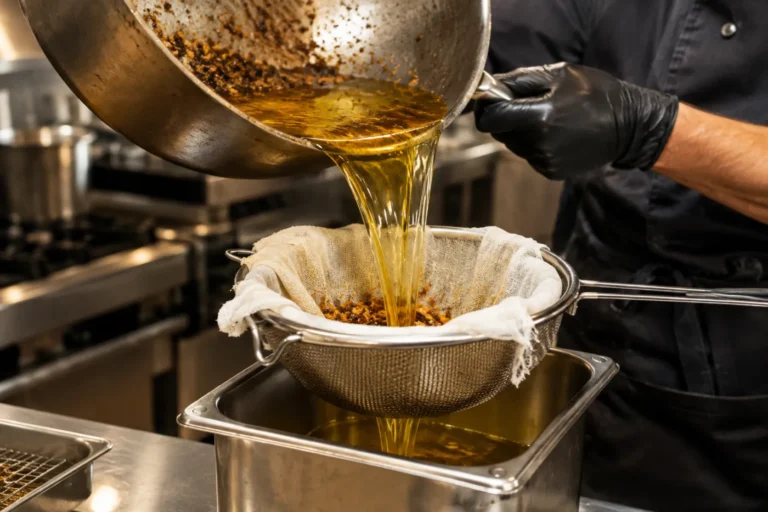
Yellow grease is the used vegetable oil and animal fat that comes out of restaurant fryers. It can range from light amber to dark brown, but the name comes from how the trade grades it, not strictly from the color. Oil from frying fries, chicken, tortilla chips and similar foods all end up in this category.
How Yellow Grease Is Collected
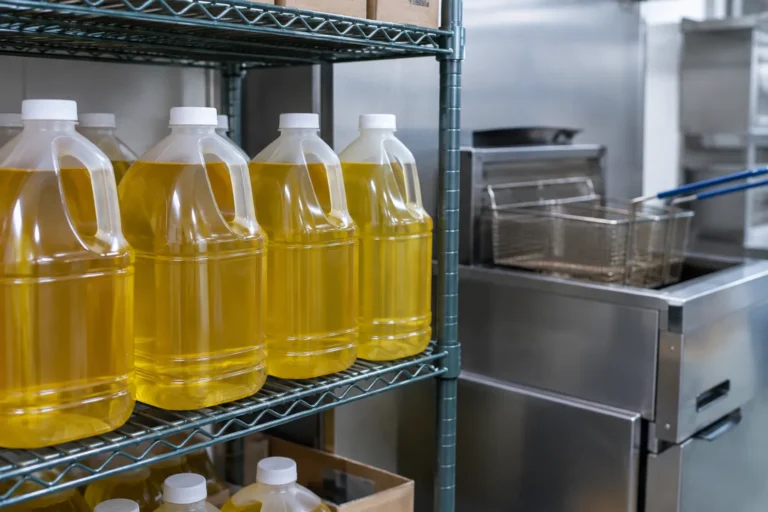
Restaurants store spent oil in a closed container outside the kitchen. A collection company picks it up on a schedule, usually with a truck that pumps the oil out. Many collectors, including Toledo Grease Service, provide the container for free. See our oil collection service.
What Yellow Grease Becomes
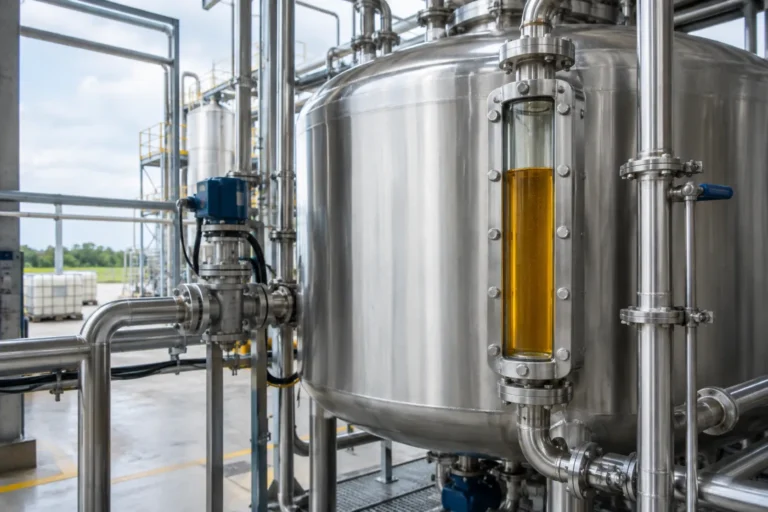
After pickup, the oil is cleaned and processed. It is commonly used to make biodiesel and renewable diesel. It can also go into animal feed ingredients and other industrial products. Our post on what used cooking oil is used for goes into detail.
Does Yellow Grease Have Value?
Yes. Used cooking oil is a commodity, which is why many collectors provide free service and some pay for oil. Quality matters. Oil that is clean, free of water and not mixed with trash is worth more. If you want to know what buyers look for, read who buys used cooking oil and how much used cooking oil is worth.
What Should Not Go Into the Yellow Grease Container
- Water or dishwater
- Trash, plastic or food scraps
- Motor oil or other chemicals
- Trap or interceptor grease
Contamination lowers the value of the load and can get a container refused.
How Yellow Grease Is Graded
Buyers and processors look at a few simple things when they take a load: how much water is in it, how much solid material is mixed in and whether anything that does not belong has been added. Clean oil from a closed container is worth more and is easier to process than oil that has been sitting open with rain and trash in it. That is one more reason to keep your container closed and your oil clean.
What Affects Quality
- Water from rain, dishwater or condensation.
- Food solids that were never strained out.
- Non-food waste like paper, plastic or gloves.
- Chemicals or motor oil mixed in by mistake.
Why Restaurants Should Care
If your oil is clean, you have more leverage with a collector, you are less likely to have a load refused and you help the recycling process work as it should. Used cooking oil is a real commodity, and keeping it clean is the simplest way to treat it like one.
If you are comparing collectors, see our guide to cooking oil recycling companies and our local overview in cooking oil recycling near me in Houston.
Related Reading
Have yellow grease to move?
Toledo Grease Service provides free containers and regular pickup in Houston. Call 832-860-8399 or request a pickup.
Frequently Asked Questions
Is yellow grease the same as used cooking oil?
In the industry, yes. Yellow grease is the common term for used cooking oil collected from restaurants.
What is the difference between yellow and brown grease?
Yellow grease is fryer oil. Brown grease comes from grease traps and interceptors and is handled separately.
Do I have to pay to have yellow grease collected?
Usually not. Many collectors provide a free container and pickup. Toledo Grease Service does.
Can I mix yellow grease with other waste?
No. Keep it clean and separate. Mixing lowers its value and can cause a pickup to be refused.