A little oil on concrete turns into a dark, stubborn stain fast. Concrete is porous, so oil soaks in instead of sitting on top. The good news is that most stains can be lifted if you act in the right order, and bigger or older ones usually just need heavier tools.
Act Fast on Fresh Spills
The sooner you deal with a spill, the less deeply it sets. Do not wipe it with a rag, which spreads it. Instead, cover the spill with an absorbent material and let it do the work.
- Cat litter
- Sawdust
- Baking soda
- Cornstarch
- Commercial oil absorbent
Pile it on thick and leave it for several hours or overnight. Sweep it up and dispose of it properly. Do not wash it into a storm drain.
Scrub With Dish Soap and Hot Water
- Wet the stain with hot water.
- Pour on a squirt of dish soap or a degreaser.
- Scrub with a stiff nylon brush, not a wire brush that can mark concrete.
- Let it sit for 15 to 30 minutes.
- Rinse with hot water and repeat if needed.
Work the stain in small sections. Concrete may look lighter when wet, so check once it dries.
Use a Degreaser or Poultice for Old Stains
Older stains need more. A concrete degreaser works better than soap. Follow the label, keep it off plants and drains, and rinse well. For deep stains, a poultice made from an absorbent powder and a cleaning agent can pull oil back out of the pores as it dries. This takes a day or two and sometimes more than one round.
When a Pressure Washer Makes Sense
A pressure washer with hot water is the fastest way to clear larger areas. Pre-treat with degreaser, let it sit, then wash from one side to the other. Be careful with force, since too much pressure can scar concrete.
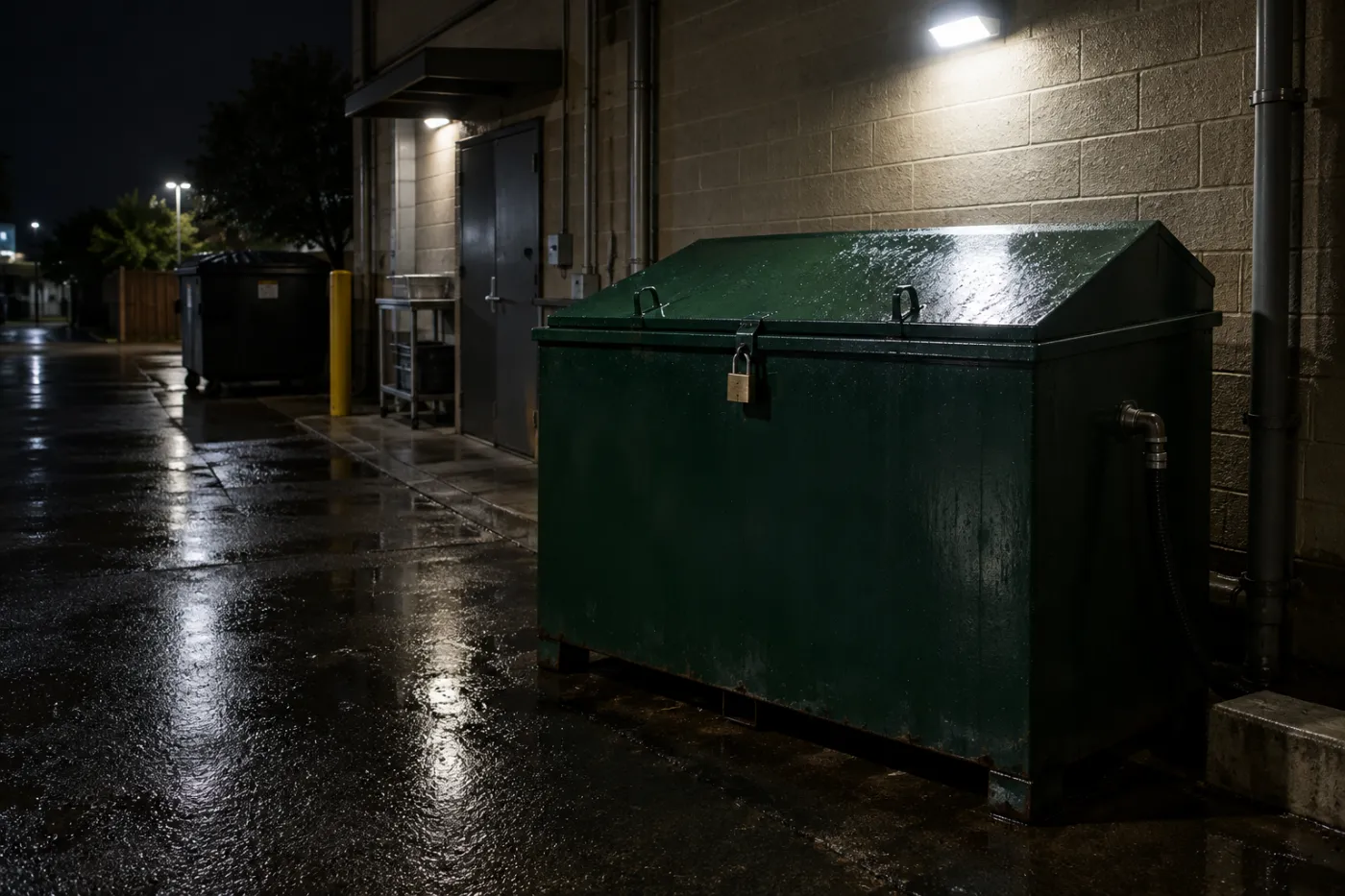
For restaurants, this is often the better route. We offer pressure washing for restaurants, including the area around your oil container and dumpster pad.
Keep Runoff Out of Storm Drains
Oil and degreaser should not run into storm drains, which lead to local waterways. Collect rinse water where possible, block nearby drains and dispose of waste properly. This matters most on commercial properties.
Prevent Future Stains
- Use a container with a lid that closes properly
- Place the container on a flat, stable spot
- Do not overfill it
- Wipe up small drips right away
- Schedule regular pickups so it never overflows
Our free containers and scheduled pickup help keep spills from happening. For storage tips between pickups, see how to store used cooking oil.
Test Before You Treat the Whole Area
Always test a cleaner on a small hidden spot first. Some cleaners lighten or etch concrete, and sealed surfaces react differently from bare concrete. If the test patch looks fine after drying, go ahead with the full stain.
What to Expect From Old Stains
Stains that have sat for months may not disappear completely. They often fade a lot with repeated treatment, but a faint shadow can remain. If appearance matters, such as at a restaurant entrance, a hot-water pressure wash plus a degreaser usually gets the best result.
Safety Notes
- Wear gloves and eye protection
- Keep pets and kids away while it dries
- Do not mix cleaning chemicals
- Sweep absorbent into a bag and dispose of it properly
- Never use gasoline or solvents on oil stains
For restaurant pads and dumpster areas, we do the whole job, from oil container service to pressure washing. Ask us about both.
Keep the Back Lot Clean
Toledo Grease Service gives Houston restaurants a free container and scheduled pickups, with same-day or next-day service when you need it. Call 832-860-8399 or send us a message.
Frequently Asked Questions
Can baking soda remove oil from concrete?
It absorbs fresh oil well. Pair it with scrubbing and rinsing for best results.
Why does oil stain concrete so badly?
Concrete is porous, so oil soaks in. The longer it sits, the deeper it goes.
Is a pressure washer safe on concrete?
Usually, but too much pressure can damage the surface. Pre-treat and use the right nozzle.
Do you pressure wash restaurant areas?
Yes. We offer pressure washing for restaurants, including areas around containers and dumpsters.
Can I pour the rinse water into a storm drain?
No. Oil and degreaser should not enter storm drains. Collect or block runoff.
How do I stop stains coming back?
Use a lidded container, avoid overfilling and keep pickups on schedule.