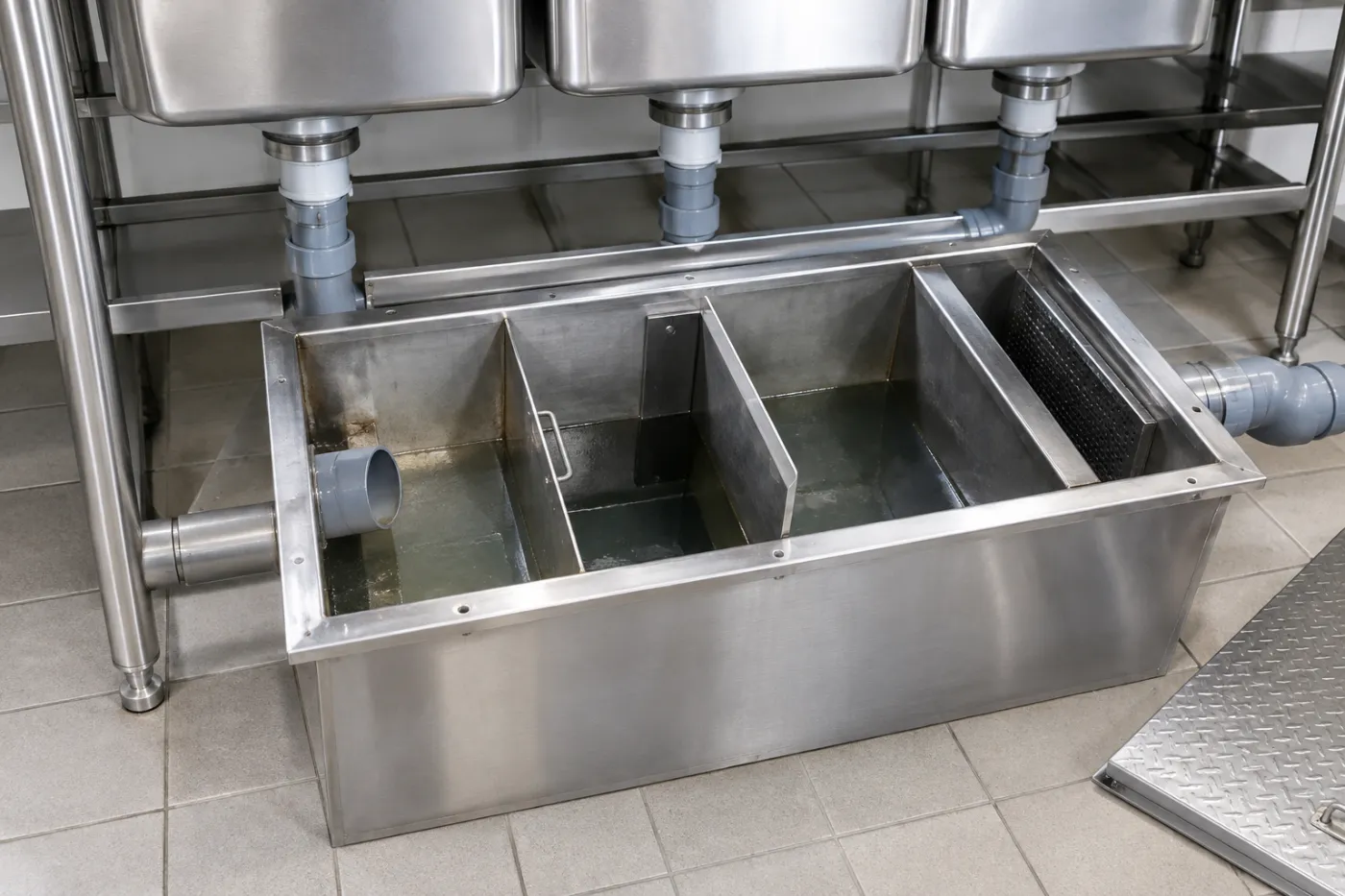
Every restaurant kitchen has one, and most owners only think about it when something backs up. Here's what a grease trap is, how it works, what Houston requires, and the one mistake that fills it up far faster than it should.
The quick answer
A grease trap is a plumbing device that sits between your kitchen drains and the sewer. It slows down wastewater so fats, oils and grease float to the top and solids sink, letting cleaner water flow out. It catches grease that gets washed off dishes, not the oil from your fryers.
What Is a Grease Trap?
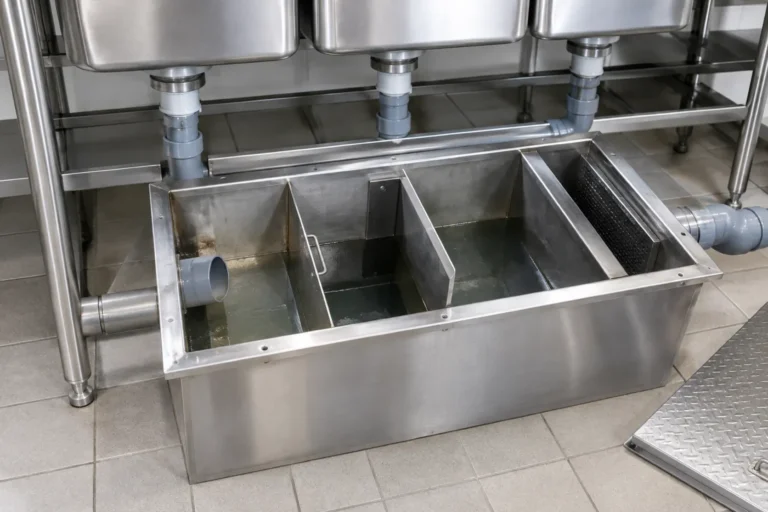
A grease trap, sometimes called a grease interceptor, is a tank connected to your sinks and floor drains. Its job is to stop fats, oils and grease (FOG) from reaching the city sewer, where they cool, harden and cause clogs.
How Does a Grease Trap Work?
- Wastewater from sinks and drains flows into the trap.
- Baffles inside slow the water down.
- As it cools, grease floats to the top and food solids settle to the bottom.
- Water from the middle layer flows out to the sewer.
- The trapped grease and solids build up until the trap is pumped out.
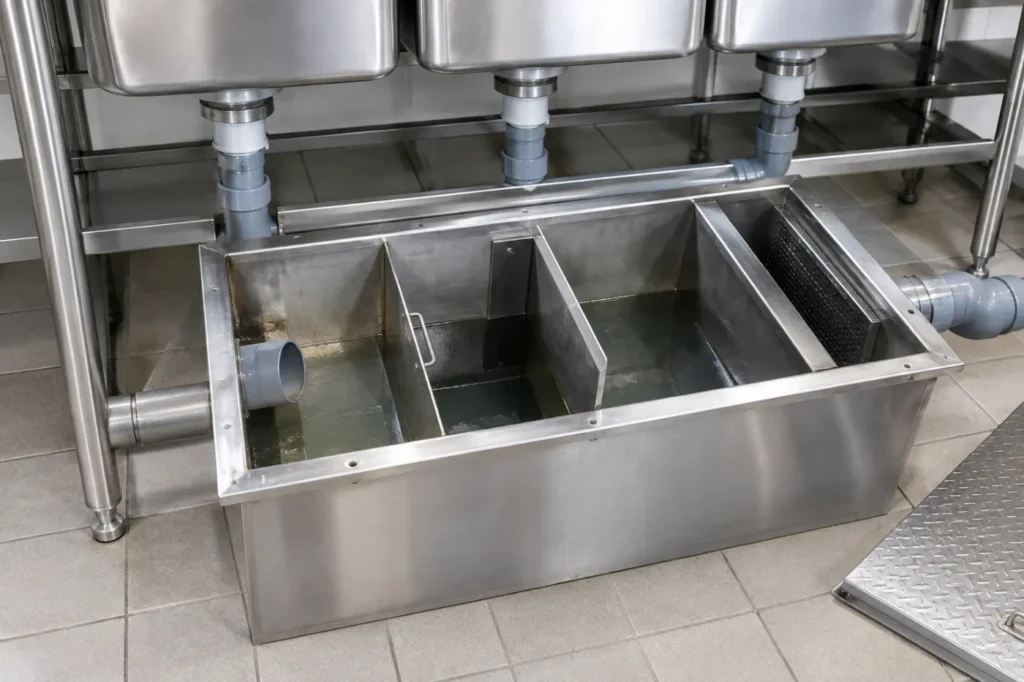
Where Is the Grease Trap in a Restaurant?
Smaller grease traps usually sit under or next to the three-compartment sink or dish area. Larger interceptors are usually outside, buried in the ground near the building, with access lids at ground level. If you're not sure where yours is, your landlord, plumber or grease trap pumping company can show you.
Grease Trap vs Grease Interceptor
The terms often get used for the same thing. Generally, a grease trap is a smaller unit, often under a sink, built for lower flow. A grease interceptor is larger, often installed in the ground outside, and handles higher flow from busier kitchens. Houston's code uses the word interceptor.
Houston Grease Trap Rules
Under Section 47-512(b) of the City of Houston Code of Ordinances, every interceptor within city limits must be fully pumped out at least every 90 days, unless the business has an approved waiver. Busy kitchens often need it more often.
Health investigators can inspect and sample your trap, and they also check your dumpster, rendering oil bin and the area around it. Use a licensed grease trap pumping company and keep the paperwork they give you.
Signs Your Grease Trap Needs Attention
- Sinks and floor drains slow down.
- Bad smells near drains or the trap lids.
- Gurgling sounds from the drains.
- Water backing up into sinks or onto the floor.
- Grease showing up in nearby manholes or the parking lot.
If you notice any of these, call your pumping company. Don't wait for the next scheduled service.
Why Fryer Oil Should Never Go in Your Grease Trap
- It fills the trap fast, which means more frequent pumping and higher costs.
- It raises the risk of backups into your kitchen and overflows into the sewer.
- It can put you out of compliance with the city's grease rules.
- It wastes a recyclable product. Used fryer oil can be collected and recycled, and restaurants can even get paid for it.
Grease Trap Waste vs Used Cooking Oil
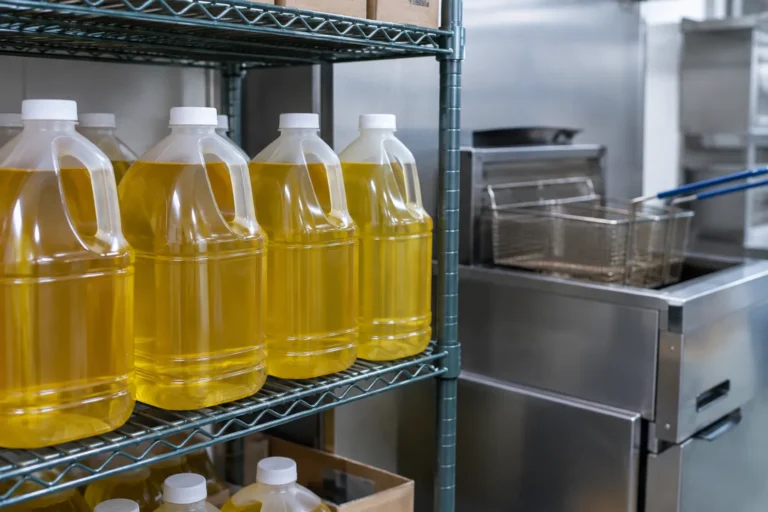
They are two different waste streams. Grease trap waste, often called brown grease, is a mix of grease, food solids and water from your drains, and it is pumped out of the trap. Used cooking oil, or yellow grease, is the oil from your fryers, and it goes into a separate collection container. Learn more about what used cooking oil is used for.
How to Keep Your Grease Trap Working Longer
- Scrape plates into the trash before they go in the sink.
- Use sink strainers to catch food bits.
- Wipe greasy pans with a paper towel before washing.
- Keep fryer oil out of the drains. It goes in your used cooking oil container.
- Don't count on hot water or additives to push grease through. That just moves the problem further down the pipe.
- Keep up with pumping and keep the records.
Who Cleans Grease Traps in Houston?
Grease traps are pumped by licensed liquid waste haulers. Toledo Grease Service doesn't pump grease traps. We handle the other half of the job: collecting your used fryer oil so it never ends up in the trap in the first place.
Keep fryer oil out of your trap
Toledo Grease Service gives Houston restaurants a free used cooking oil container and scheduled pickups, so fryer oil never ends up in the drain. Call 832-860-8399 or request a pickup.
Frequently Asked Questions
How often should a grease trap be cleaned in Houston?
City of Houston code requires interceptors inside city limits to be fully pumped at least every 90 days unless a waiver is approved. High-volume kitchens may need more frequent service.
Do all restaurants need a grease trap?
Food service businesses that produce fats, oils and grease are generally required to have one. Check with the city for the requirements that apply to your location.
Can I pour fryer oil into the grease trap?
No. Fryer oil should go into a separate used cooking oil container and be collected for recycling.
What is the difference between a grease trap and a grease interceptor?
A grease trap is usually smaller and indoors, while an interceptor is larger and often installed outside in the ground. Both separate grease from wastewater.
How does a grease trap work?
It slows kitchen wastewater down so grease floats to the top and solids sink. Cleaner water from the middle flows out to the sewer, and the trapped grease and solids are pumped out on a schedule.
What happens if you don't clean a grease trap?
It fills up, drains slow down, odors build and grease can back up into your kitchen or overflow into the sewer. It can also put you out of compliance with city rules.