Every kitchen makes grease. The trouble is that it comes in two forms that get handled very differently, and mixing them up leads to clogged lines, failed inspections and expensive plumbing calls. Here is how restaurant grease disposal actually works.
Two Kinds of Restaurant Grease
Most people say "grease" for everything, but there are two separate streams in a commercial kitchen:
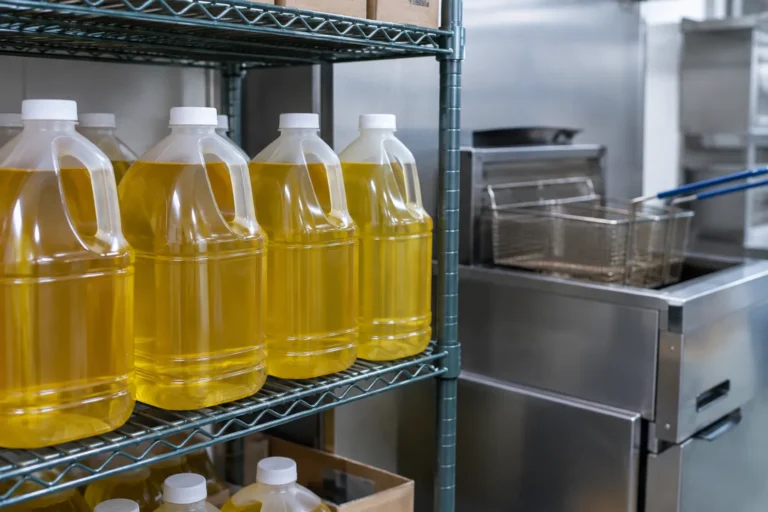
- Used cooking oil. Fryer oil and other liquid cooking fat you drain from equipment. It is reusable as a raw material and is collected by oil collectors.
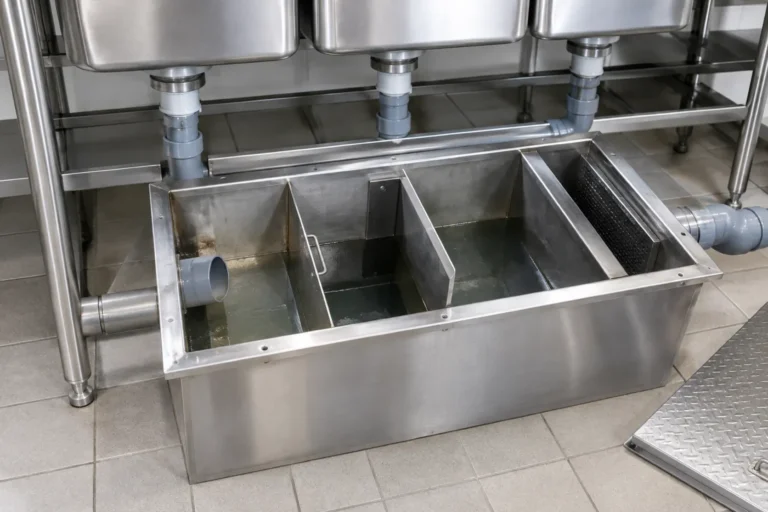
- Grease trap waste. The fat, oil and food solids that collect in your grease trap or interceptor. It is pumped out by a licensed hauler.
Toledo Grease Service collects used cooking oil. We do not pump grease traps. If you are not sure what a grease trap is, read what is a grease trap.
Never Pour Grease Down the Drain
Liquid oil looks harmless, but it cools and sticks to pipe walls. Over time it builds up with food particles and hardens into blockages. These clogs back up your own kitchen and can cause overflows in the sewer system, which is why cities regulate fats, oils and grease.
The rule is absolute: no fryer oil down any drain, sink or floor drain. Not hot, not diluted, not with soap. Wipe heavily greasy pans with a paper towel first and scrape food waste into the trash.
How to Handle Used Cooking Oil
- Let the oil cool until it is safe to handle.
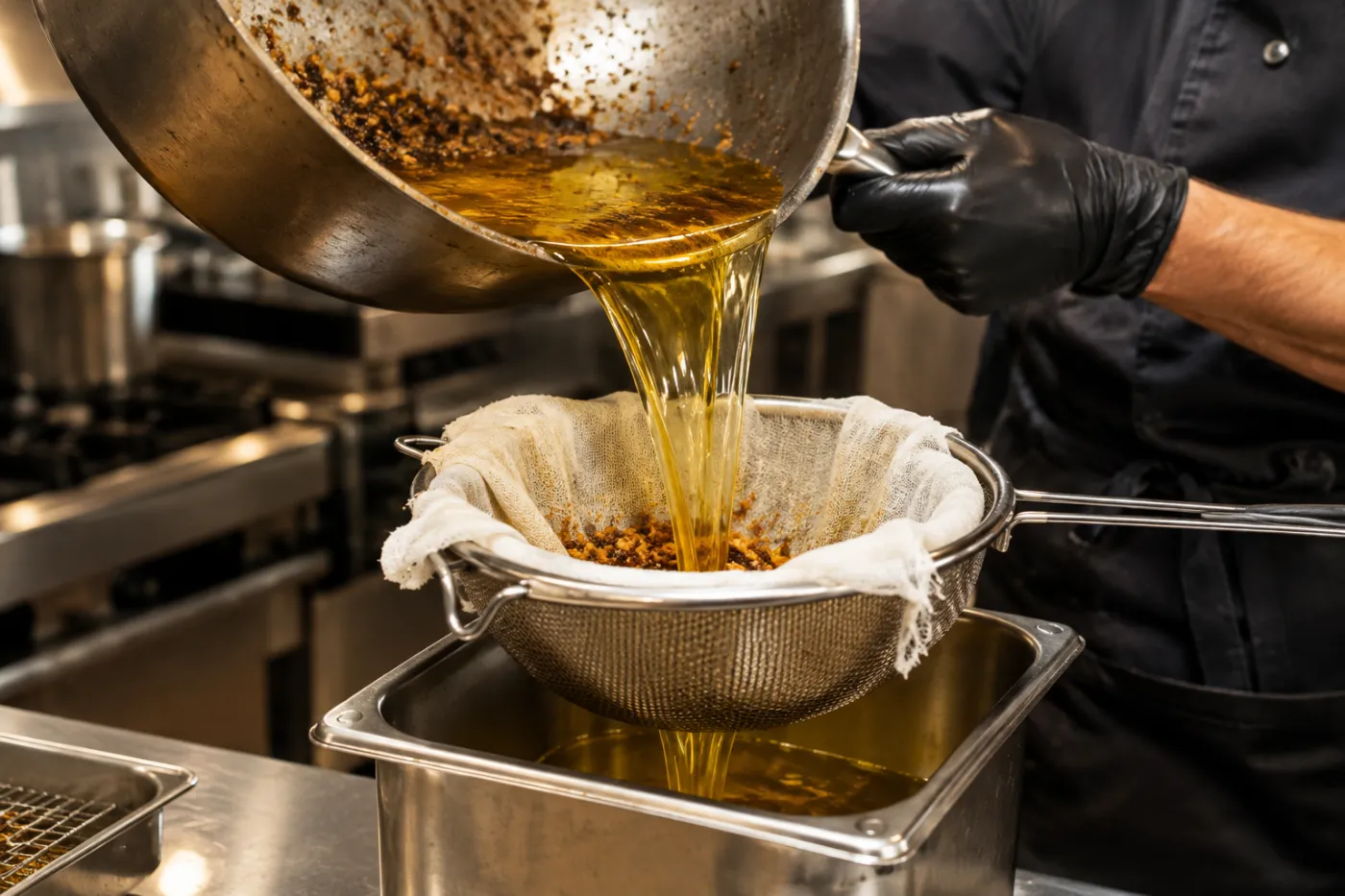
- Filter out food bits if you can.
- Pour it into your collection container, not a bucket or an old drum.
- Keep the lid closed so water, pests and trash stay out.
- Call for a pickup when the container is about three quarters full, or let a schedule handle it.
A free container with scheduled pickup removes most of the work. See how it fits into our pickup service. For more detail on the disposal side, read how to dispose of used cooking oil.
How to Handle Grease Trap Waste
Grease traps need regular cleaning by a licensed hauler who pumps and hauls the waste. How often depends on your volume and local rules, and many kitchens clean monthly or quarterly. Keep your service records handy because inspectors often ask for them.
Do not try to pour trap waste into your used oil container. It is a different material and will contaminate the oil.
Keep the Back Area Clean
Grease around your dumpster or container is a problem all its own. It is slippery, it smells and it attracts pests. Wipe up spills right away, keep lids closed and ask about pressure washing for restaurants if the pad needs a deeper clean.
A Simple Weekly Routine
- Daily: filter fryer oil, scrape plates, wipe spills
- Weekly: check the oil container level and the area around it
- Monthly: confirm trap service is on schedule and records are filed
- Always: train new staff on the no-drain rule
Write it down and post it in the back. A routine nobody has to think about is the one that gets followed.
What Inspectors Look For
Health and plumbing inspectors do not only look at your trap. They also look at your back area. They want to see lids closed, no oil pooling around containers, no overflowing bins and a clean pad. A sealed container emptied on schedule handles most of that without extra effort.
Common Mistakes That Cost Money
- Pouring fryer oil into floor drains at closing
- Mixing trap waste into the used oil container
- Letting the container overflow before calling
- Using open buckets that tip over or attract thieves
- Skipping trap cleaning because nothing seems wrong
Each one is easy to fix with a rule and a reminder. Oil in the wrong place turns into a plumbing bill, a cleanup job or a citation.
Train Your Team Once, Then Repeat
Most grease problems come from a new hire who does not know the rule. Put the no-drain rule in your onboarding, post a sign near the dish area, and show people where the oil container is. A five-minute walk-through saves a lot of grief. Our oil storage guide is a good thing to hand to a kitchen manager.
Get Used Oil Off Your Plate
Toledo Grease Service gives Houston restaurants a free container and scheduled pickups, with same-day or next-day service when you need it. Call 832-860-8399 or send us a message.
Frequently Asked Questions
What is the difference between used oil and grease trap waste?
Used oil is fryer oil that gets collected for recycling. Trap waste is the fat and solids from your grease trap, pumped by a licensed hauler.
Do you pump grease traps?
No. We collect used cooking oil only.
Can I pour oil down the drain if I use hot water?
No. Hot water only moves the oil further down the line, where it cools and clogs.
How often should my oil be collected?
It depends on your volume. Most kitchens do weekly, biweekly or monthly pickup.
Can you pick up the same day?
Yes, same-day and next-day pickups are available when a container fills early.
Where do you serve?
Houston and nearby cities. Call 832-860-8399.